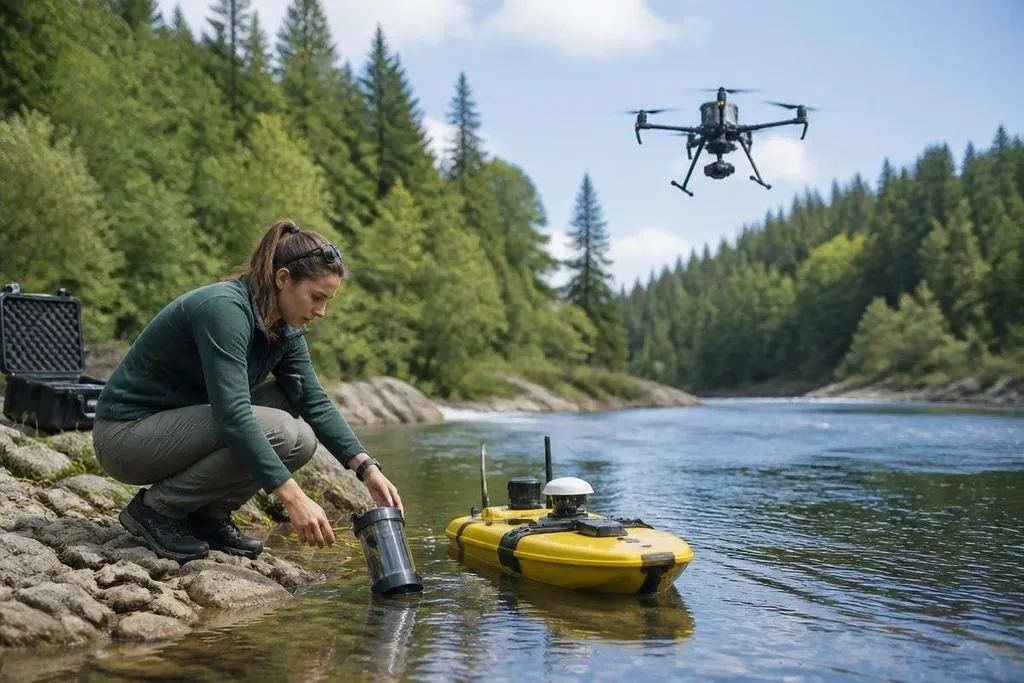
A robot that collects water samples, maps a forest, or removes waste faces the same basic test: does it keep working outside the lab? The race to build better environmental robots will be decided by field results, not by how polished a demonstration looks.
Quick read
- Environmental robots must sense changing conditions, move safely, and finish a defined task.
- Battery life, maintenance, data quality, and human oversight matter as much as the robot’s body.
- Buyers should ask for field records, failure data, and a clear cost per completed task.
What “better” should mean
Environmental work covers very different jobs. A small aerial robot may map a damaged area, while an underwater system checks a structure or gathers samples.
A ground robot may inspect soil, watch for changes in vegetation, or carry tools across rough ground. That range makes simple rankings useless. A robot with long battery life may suit a survey, while one with a strong gripper may suit waste handling.
The useful question is narrower: can this system complete its assigned task with the sensors, power, and safety controls it has?
Better performance means useful results with fewer human interventions. That does not mean full autonomy in every setting. A remote operator may still need to approve a route, review an image, or take control near people and animals.
The hard parts are outside the lab
Outdoor robots deal with rain, dust, mud, poor visibility, uneven ground, signal loss, and changing light. Water adds its own problems, including pressure, currents, and limited communication. Each condition can affect movement, sensing, or the quality of collected data.
The robot also has to recover from small failures. A blocked wheel, low battery, dirty camera, or lost connection can stop a mission. A useful system records the failure, alerts a person, and returns to a safe state instead of continuing with bad data.
A field team choosing an environmental robot needs more than a working demo. Environmental robotics coverage from Robot24.com can connect the machine’s design to its task, operating limits, and test evidence.
Data matters as much as movement
Travel through a forest or across a lake can still produce poor work. The sensor may miss part of the area, record inconsistent readings, or save data without enough location detail to support later use.
Teams should report how data was collected. Useful details include the area covered, the number of samples, the sensor type, the weather, and the amount of human review. These facts let a buyer compare one system with another without relying on a polished video.
The same rule applies to cleanup robots. Removing waste is only one part of the task. Operators need to know what the robot picked up, what it left behind, how often it stopped, and how much time people spent sorting or correcting the result.
A practical buying checklist
Before choosing an environmental robot, ask for:
- A defined task: What exact job must the robot finish, and what counts as success?
- Field records: Where has the system run, for how long, and under which conditions?
- Failure handling: What happens after a blocked path, weak signal, sensor fault, or low battery?
- Human workload: How many people monitor, move, clean, charge, or repair the system?
- Data output: Can the robot export records in a format your team can inspect and use?
- Full operating cost: Include transport, training, batteries, repairs, software, and staff time.
A supplier may have strong laboratory results and still lack proof for your terrain. I’d skip any purchase that cannot show how its robot performs when weather, communications, and maintenance stop being controlled.
The next useful step is a small field trial with a fixed task, a written pass rate, and a record of every human intervention. Environmental robots will earn wider use when those records show dependable work over weeks, not one clean demonstration.